Reflections from my journey, Doi Inthanon, Thailand
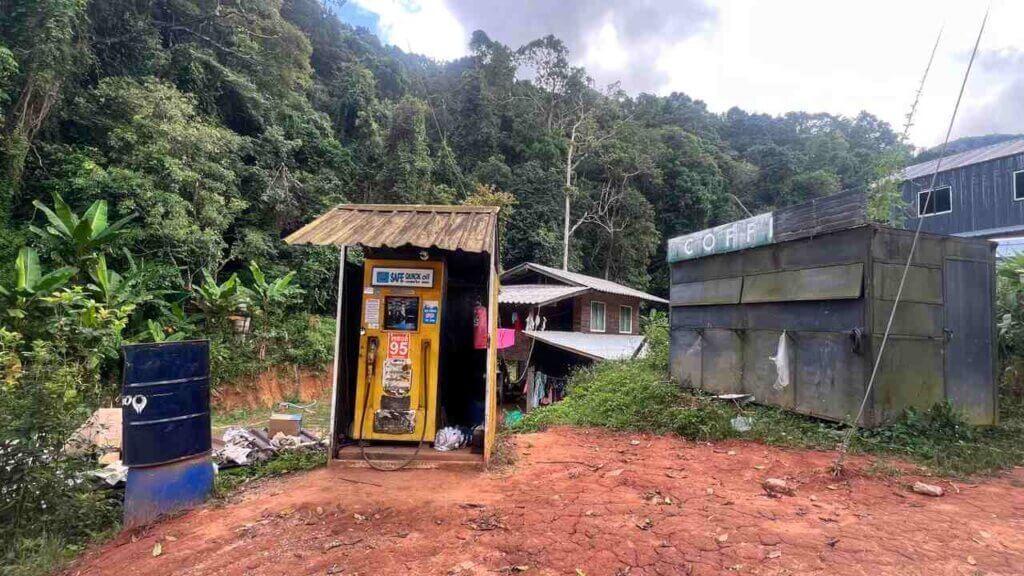
Yesterday I photographed a little fuel pump beside a coffee stop in Mae Klang Luang, a small village on the slopes of Doi Inthanon, Thailand’s highest mountain.
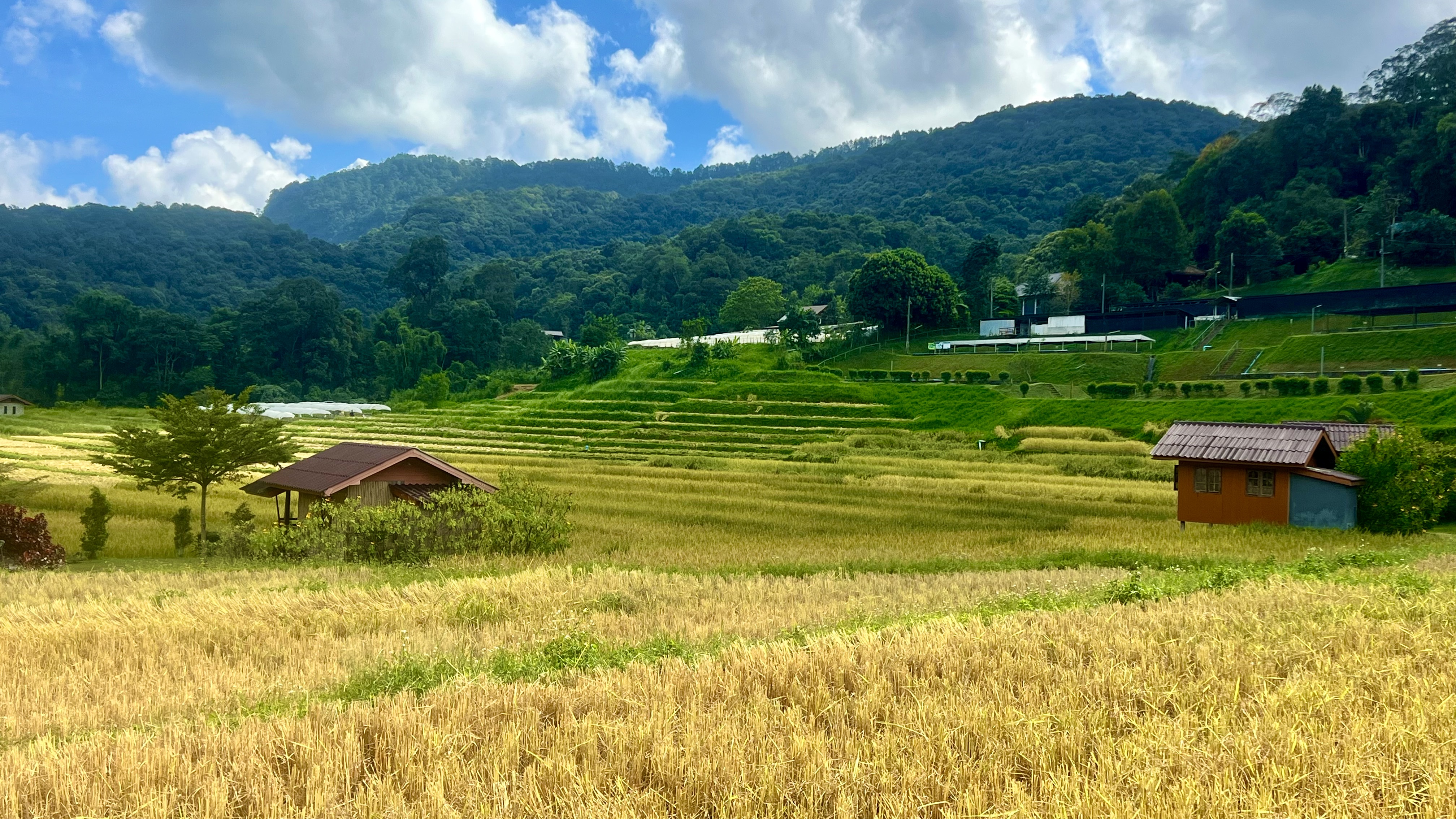
Around the village were golden rice fields and forested mountains that received water directly from the clouds. I was enjoying the beauty around me without knowing much about the lives of the people who called this place home.
I was told that the community’s Karen ancestors had migrated from Tak Province around 270 years ago, eventually settling here, and that opium cultivation and addiction had devastated much of the community.
I tried to imagine what it meant to depend for your livelihood on the very crop that was also causing suffering around you. How do you begin a new life when you need help with addiction and still have a family to feed? I thought about the mothers, fathers, and children whose lives had been affected, and how much pain there might have been behind this beauty.
But it was the more recent part of their story that moved me most. Through King Bhumibol Adulyadej’s Royal Project, highland farmers received training and support to grow and sell alternative crops, including coffee, fruits, and vegetables. Doi Inthanon became a national park in 1972, although the transition away from opium was a gradual process.I kept thinking about what that opportunity must have meant to families who needed another way to earn a living, and how much courage it must have taken to trust something unfamiliar. Those changes felt so recent as I looked across the fields. I wondered how many of the people around me remembered those years and had lived through the difficult beginnings.
A new crop needs tending long after it has been planted. There were methods to learn, seasons to wait through, and uncertainty about whether the effort would provide enough for a family. Help had given people a beginning, but they were the ones who carried the work forward, day after day, season after season.
I enjoyed a colorful feast of fresh vegetables overlooking the rice fields. I watched women sitting on the floor, weaving garments thread by thread, continuing a tradition of skill, art, and beauty. To my right were humble bamboo homes alongside concrete and glass houses under construction. Everywhere I looked, from the little fuel pump beside the coffee stop to the golden fields, I saw renewal, a community growing and flourishing.
Knowing something of what had come before, I felt humbled.
We often speak about change as an individual decision. This visit reminded me how difficult it is to choose another way of living when we cannot see how we will support ourselves or feed our families. Encouragement means more when it comes with something people can actually use, whether that is care, education, or a skill that helps them earn a living.
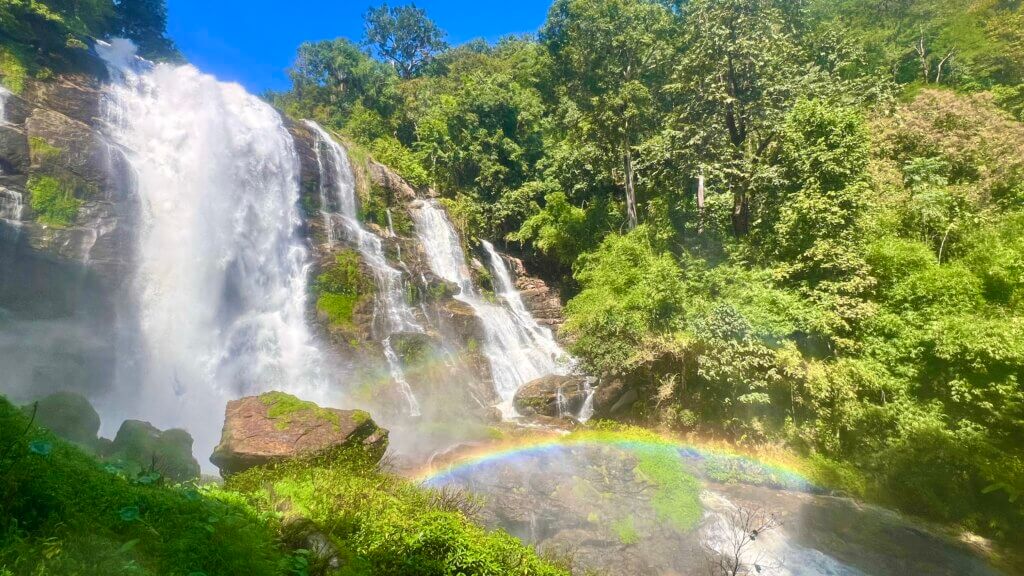
On that same mountain, I saw a waterfall with a lingering rainbow shining through its spray; it was magical, and I stood watching in awe, grateful to be there.
I will always remember that rainbow, the golden fields, and the warmth of the people who welcomed me. I had come to see a beautiful mountain, and I left moved by the lives people had built upon it through years of courage and patient work.
I felt grateful and hopeful, wondering what might still be waiting for our care, our imagination, and our willingness to begin.
What could we grow in our lives if we gave a new possibility the attention it needs to take root?
What could we grow together if we gave one another the support to begin?
Photograph © Amira Mor