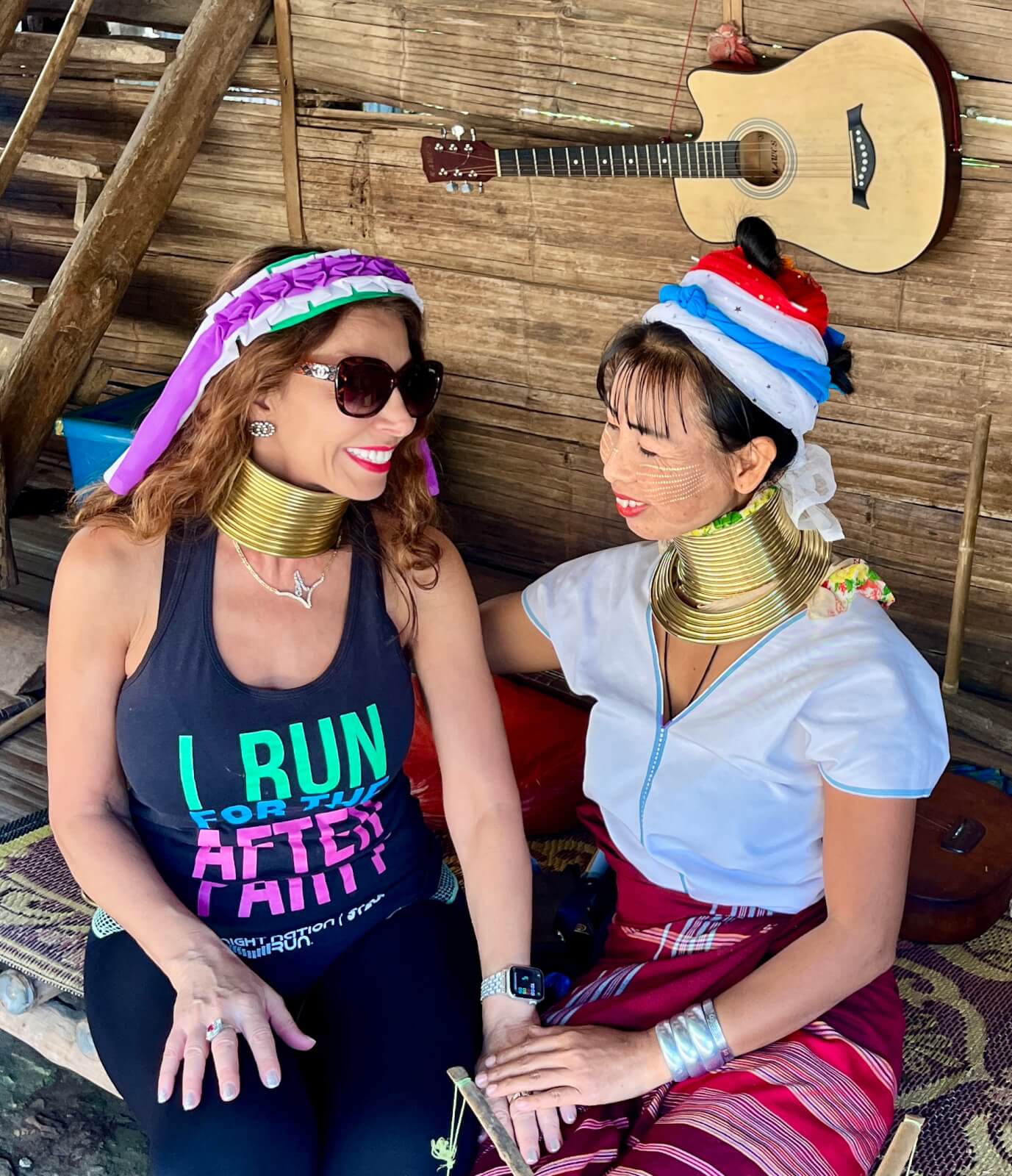
I was visiting a Kayan village in Mae Taeng, near Chiang Mai, when someone placed a curved brass piece halfway around my neck. It was made for visitors to try on. But the woman beside me wore coils that wrapped all the way around her neck.
I kept smiling, trying to keep the despair I felt for her from showing on my face. I’d had the brass against my neck for only a few moments, and I couldn’t wait to take it off.
I looked at her and wondered about things I’d never had to give a thought to. Could she turn her head comfortably when someone called to her? What was it like to eat, to shower, or to sleep?
I could try on something that resembled what she wore, but I could not try on or imagine her life.
I saw mostly women and children that day. When I asked where the men were, I was told they were working on farms.
My attention kept coming back to the little girls. In the village, I was told that some girls begin wearing a brass coil when they are about five years old and that every five years they are fitted with a longer one. To me, it seemed like a forever collar. I have since learned that the coils can be removed with skilled assistance, and if they are young enough, their shoulder and back will return to normal.
I pictured my granddaughters and thought about our traditions. I wondered what a girl that age sees when she looks at her mom wearing these neck rings. Perhaps she thinks her mother is beautiful and wants to look like her.
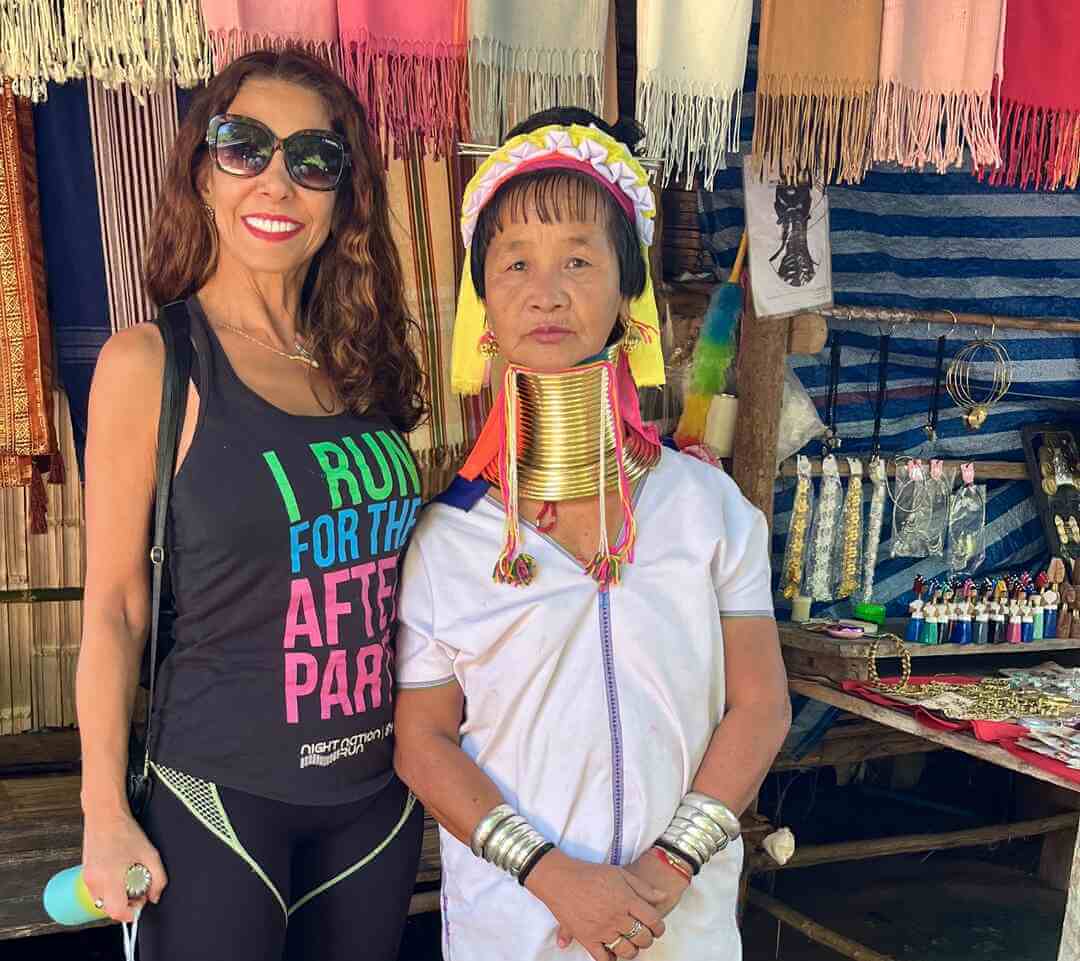
The Kayan are an ethnic minority from Myanmar, formerly called Burma. Many Kayan families fled conflict and found refuge in northern Thailand in the 1980s. One explanation for how the tradition began is that the coils offered protection from tiger bites to the neck. I can see how that might have made sense, though it’s only one of the stories about their origin. For some Kayan women, the coils can express beauty and cultural belonging, keeping a tradition alive across generations.
We all grow up with ideas about beauty, and I do not assume that something unfamiliar to me must be a burden to someone else. A woman may love her coils and feel proud of what they represent. I thought about stiletto shoes and how familiar they look to me, even though I know how uncomfortable they can be. Those few moments with the brass against my neck told me something about my own feelings, but I wanted to know about hers.
In the village, I was told that residents could not go freely into the city. I left without knowing what that meant in practice for the families I met. Could the girls attend school alongside other children? What chances did they have to discover an interest or a talent beyond what people like me had come to see?
I wrote a book called The Life You Choose, and standing there made me examine those words more deeply. It is easier to speak about choice when you can go where you want, get an education, or find another way to earn a living.
I thought again about that little girl who might want to look like her mother at age five; I wondered about the conversation they might have years later, when the girl was old enough to know her own mind. Would continuing this tradition be something she welcomed, or a responsibility she felt unable to refuse?
I took the brass piece from around my neck and continued on the journey I’d chosen for myself. I hoped the woman beside me was happy with the life she had inherited, or maybe it was exactly the life she chose. But if she woke up one morning and decided she no longer wanted to wear the coils, would she feel free to take them off and choose her life?
Reflection from my journey, Mae Taeng, Chiang Mai, Thailand.