One of the gifts of travel is that it does not simply introduce us to new places.
It introduces us to ourselves.
During my time in Japan, I was struck by the quiet consideration I observed in everyday life. People appeared deeply aware of those around them. There seemed to be a genuine desire not to disturb, inconvenience, or impose upon others.
Order is respected. Public spaces are cared for. Trains carrying thousands of people remain remarkably quiet. Even in one of the most populated cities in the world, there is a sense that everyone understands their responsibility toward the whole.
Harmony appears to be an integral part of the culture.
There is much to admire in that.
I believe harmony is one of the most beautiful things human beings can create. I would choose harmony over unnecessary conflict at any moment of my life.
Yet Japan made me look more deeply at what harmony means and what it may sometimes ask of us.
Most Japanese people probably value harmony sincerely. I do not believe it is simply an artificial performance imposed upon unwilling people. Consideration for others can grow from kindness, tradition, discipline, and a genuine sense of responsibility toward the community.
But even a freely valued principle can become a powerful expectation.
From an early age, we all receive instructions from the societies in which we live.
In Japan, a person may learn not to inconvenience others. They may learn to anticipate what the group needs, read the atmosphere, and recognize which emotions are appropriate to express. They may also understand that visibly departing from the group can have social consequences.
But this is not exclusively Japanese.
American culture gives its own instructions. It teaches people to appear successful, independent, confident, young, productive, and happy. One culture may pressure people to fit in. Another may pressure them to stand out.
Neither is completely free from conformity.
We are all shaped by the societies to which we belong. We simply receive different instructions about who we should be.
In Japan, I began to notice this contrast between generations.
Many of the older women I observed appeared restrained and modest, almost determined not to draw attention to themselves. In contrast, some younger people in Tokyo embraced highly imaginative forms of fashion. Their clothing, hair, and makeup did not simply enhance their natural appearance; together, they seemed to create an entirely new character.
At first, I did not understand it. It felt so unfamiliar to me that I interpreted it as an escape from adulthood—or perhaps even from the self.
But I was judging something before I understood it.
Perhaps these young people were not disappearing at all. Maybe they were experimenting, creating, belonging, or reinventing themselves through fantasy. Perhaps a carefully constructed appearance offered a form of expression that felt safer or more freeing than expressing themselves in conventional ways. Maybe they simply found joy in becoming a work of art.
I do not know. I cannot know what lives inside another person.
I can only be honest about what I observed, what I felt, and what the experience caused me to question.
Similar questions arose when I looked at Japanese architecture.
I have become a minimalist. I do not need many possessions; I prefer more space than stuff.
Space allows life to breathe. An uncluttered room leaves room for light, movement, thought, inspiration, and possibility.
Yet some of the spaces I encountered in Japan felt almost too restrained for me. They were clean, aesthetically beautiful, and carefully composed, but sometimes I found myself searching for something personal within them.
Where was the color chosen simply because someone loved it?
Where was the treasured object that revealed a life?
Where was the small imperfection that said, “This is mine. This is me”?
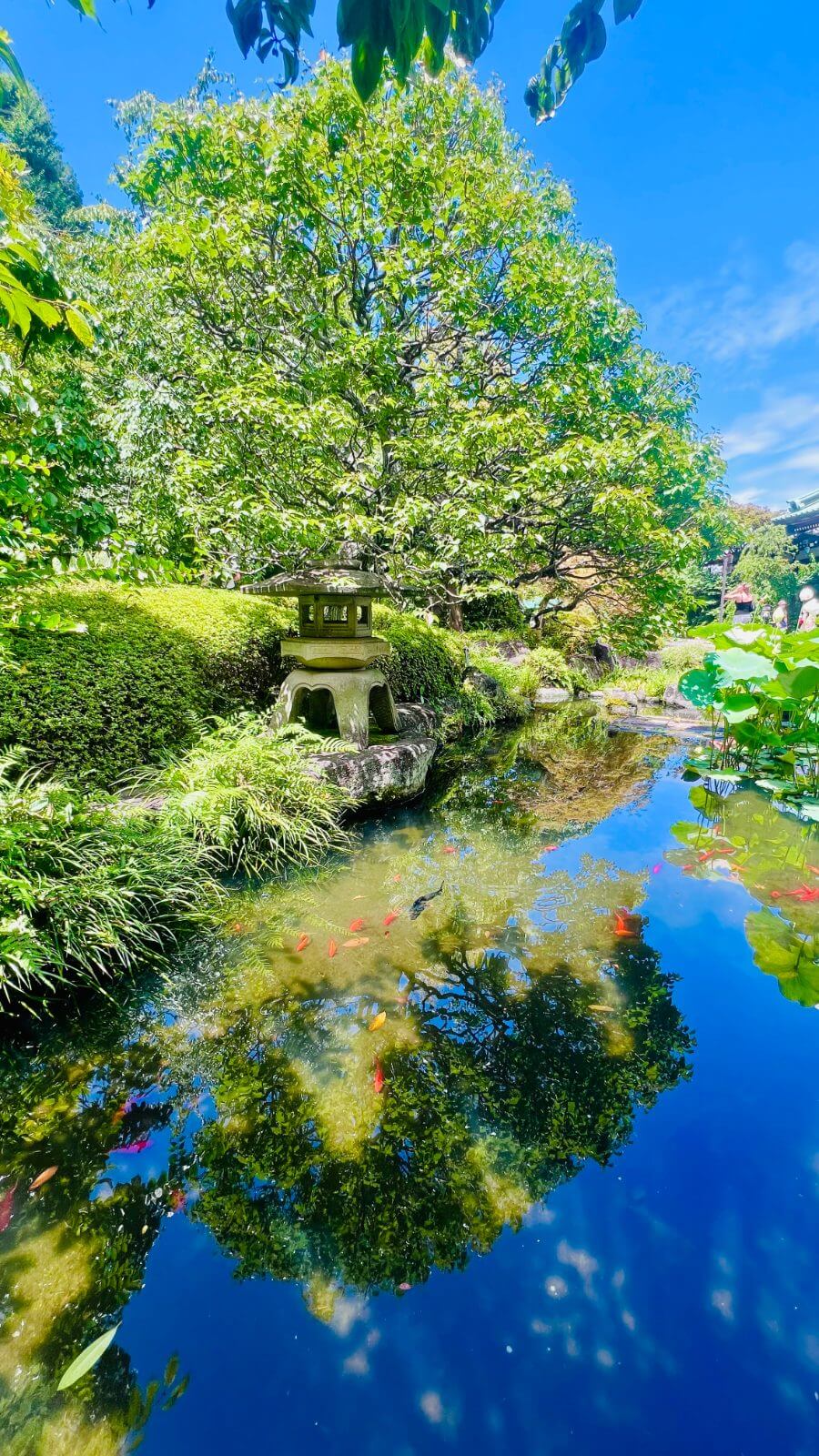
Japanese architecture taught me to look differently at emptiness.
Space is not necessarily the absence of life. Emptiness can hold stillness, intention, and possibility.
But I also believe that a home, like a life, should contain some reflection of the person living within it.
Perhaps harmony, like architecture, depends upon the space we make for one another. But true harmony must also leave enough space for each person to exist honestly.
The self does not need to be loud in order to be real. It does not need to demand attention or dominate a room. A quiet person can possess a deep and powerful inner life.
But being quiet is different from being silenced.
Restraint is different from self-denial.
Consideration is different from disappearance.
The question is not whether we should choose harmony or individuality. We need both.
We need to respect ourselves enough to live truthfully and respect others enough to live kindly. We need the freedom to express who we are without taking away another person’s freedom to do the same.
Japan reminded me that all human beings share the same essential humanity. We love, fear, hope, hurt, and long to belong. Yet culture teaches us different ways of carrying and expressing those experiences.
Some cultures teach discipline.
Some teach freedom.
Some teach community.
Some teach individuality.
No culture holds the whole answer.
Perhaps wisdom is the willingness to recognize what another culture does beautifully while remaining honest about the questions it awakens within us.
Japan taught me to admire the harmony created when people remain conscious of one another.
It also reminded me that harmony is not sameness.
The most beautiful harmony is not created when every voice sounds alike. It is created when different voices can exist together, each making room for the others without surrendering its own truth.
Perhaps that is the kind of harmony we are all searching for:
A harmony that gives every human being enough space to breathe, enough freedom to be real, and enough consideration to offer that same freedom to someone else.