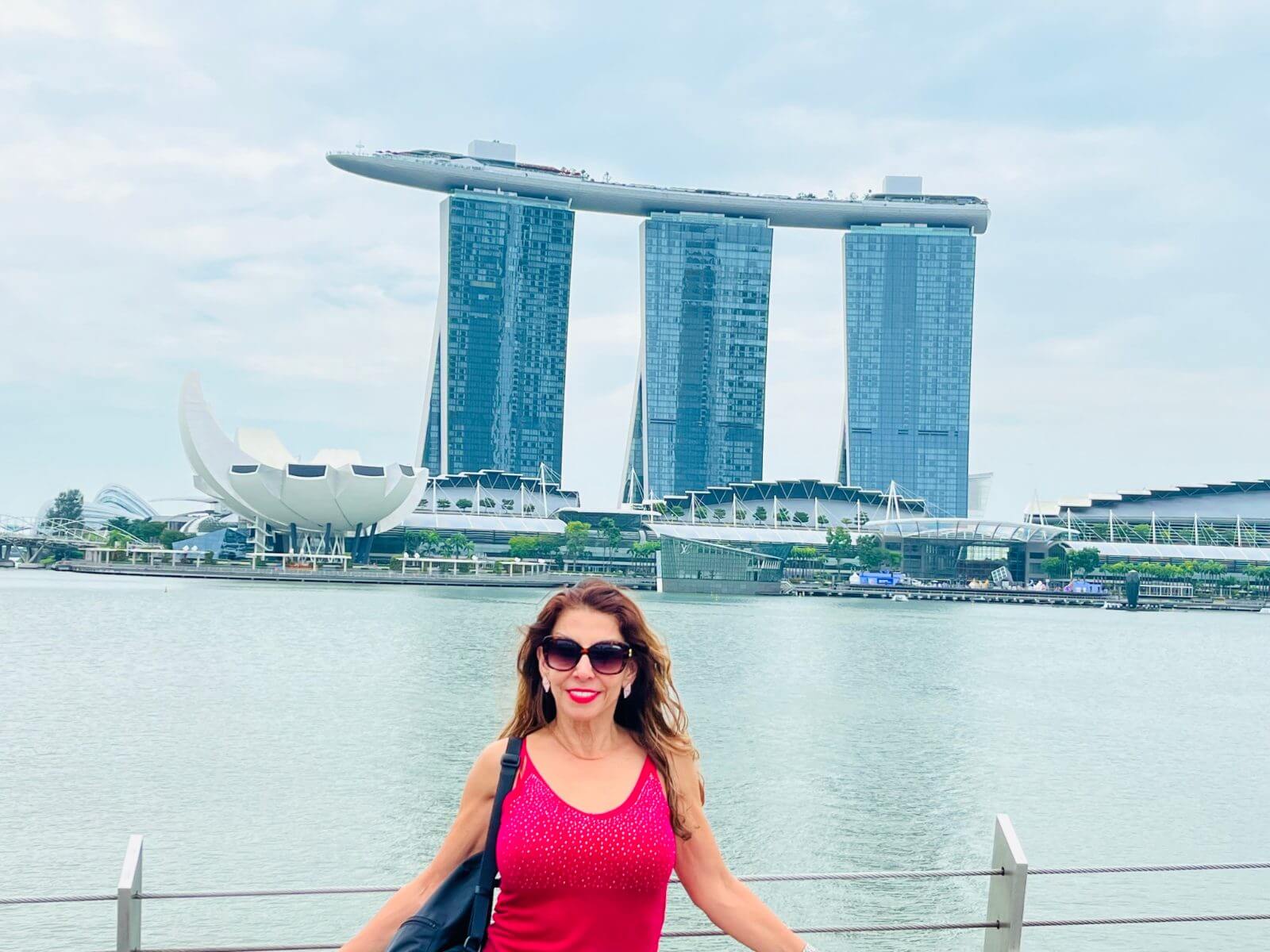
I did not expect Singapore to fascinate me as deeply as it has.
It is a small and young country, yet it appears to have achieved what many much larger and older nations continue to struggle to create.
The streets are immaculate. Public spaces feel safe and thoughtfully designed. Different cultures and faiths exist beside one another. The transportation works. Corruption is treated as a threat to the entire society rather than an unavoidable part of government.
Everywhere I looked, I saw evidence of vision.
Singapore does not appear to govern only for the present. It plans for the society it wants to become.
Nearly eighty percent of its resident population lives in public housing, but public housing here does not mean housing reserved for the poor. The government builds entire communities designed around transportation, schools, parks, shops, and the needs of everyday life.
The country invests in education and young people. A new program will offer some teenagers financial credits to explore interests beyond academics, including art, sports, technology, cooking, and sustainability.
What moved me was not simply the money.
It was the message behind it:
Your interests matter.
Your potential matters.
Who you may become matters.
Singapore also cares for its aging population. Its philosophy appears to be that society should help, but individuals should participate in the responsibility for their own lives whenever they are able.
I believe in that balance.
I do not believe that dignity comes from expecting the government to provide everything for everyone. Dignity also comes from helping ourselves, contributing what we can, and remaining responsible for the lives we create.
But responsibility should not mean abandonment.
A strong society extends a hand when someone truly needs it without taking away that person’s responsibility, independence, or dignity.
Care is expressed through clean streets and safe public spaces.
Care is expressed through housing and education.
Care is expressed by protecting the freedom of people to practice their faith while also protecting the peace of the whole.
Care is expressed by giving young people the opportunity to explore their interests and discover what makes them come alive.
In The Life You Choose, I wrote:
“A society that values peace must give people places in which to find it.”
And then, inside the National Gallery, I discovered the Calm Room.
It was a space created for anyone who felt overstimulated or overwhelmed. A place to step away, regulate the nervous system, recover focus, and return to the world more peacefully.
I was amazed by the simplicity of the idea.
We build classrooms, courtrooms, boardrooms, and waiting rooms. Why do we not build more calm rooms?
What would happen if every school, museum, airport, hospital, workplace, and government building offered people a quiet place to pause before their emotions became their actions?
I wish we had more spaces like this in the United States. I wish we had them in the Middle East, where anger, grief, fear, and generations of unresolved pain continue to shape human behavior.
A Calm Room cannot end a war. But it recognizes something important: peace in the world must begin somewhere inside the human being.
Perhaps before we ask people to behave peacefully, we should help them remember what peace feels like.
Perhaps most remarkably, care is expressed through integrity.
Singapore’s determined opposition to corruption may be what impresses me most. Corruption steals more than money. It steals trust. It teaches citizens that laws are for some people but not for others, that power matters more than truth, and that integrity is a disadvantage.
When corruption becomes normal, people stop believing that the system belongs to them.
Singapore made a different choice.
It decided that integrity is not merely a personal virtue. It is necessary to the survival and prosperity of the nation.
A peaceful society does not happen by accident.
It is created choice by choice, law by law, generation by generation.
Of course, Singapore is not perfect. No country is, and as a visitor, I understand that I am seeing only part of its reality. The cost of living is high. People worry about housing, employment, healthcare, and the future, just as they do in other countries.
There are also strict limits and severe consequences for those who break certain laws. Singapore retains the death penalty, including for serious drug-trafficking offenses.
That gave me pause.
Is such severity the cost of creating a society in which people feel safe? Does zero tolerance prevent harm, or can the punishment itself become another form of harm?
I do not yet know.
I can admire what Singapore has created while continuing to question the price of some of its choices.
Perhaps that is where the deeper question begins:
What is freedom?
Freedom can mean the freedom to speak, criticize, worship, create, protest, and live according to one’s conscience.
But freedom can also mean freedom from violence, corruption, fear, religious coercion, disorder, and the harmful actions of others.
The United States places enormous value on freedom to.
Singapore appears to place greater emphasis on freedom from.
I have spent most of my life searching for freedom. I did not understand how deeply it mattered to me until I wrote The Life You Choose.
Looking back, I can see that freedom has always shaped my decisions. I wanted the freedom to choose who I would become. The freedom to speak honestly. The freedom to create. The freedom to leave what no longer felt true. The freedom to build a life that belonged to me. The freedom to be myself.
But Singapore made me recognize another form of freedom.
The freedom to trust that public institutions will function.
The freedom to practice your faith without allowing it to threaten another person’s freedom or the peace of the whole.
The freedom to live in a society in which shared spaces are treated as belonging to everyone.
Perhaps freedom is not the absence of all boundaries.
Perhaps true freedom requires boundaries that prevent one person’s choices from destroying the safety, dignity, or freedom of another.
The question is not simply whether a society has rules. Every society does.
The question is what those rules protect, whom they serve, and whether they are applied equally and with integrity.
Singapore has shown me that life can be better than we have allowed ourselves to imagine.
It has shown me that peace is something human beings can build.
It requires discipline, vision, responsibility, and the decision to invest not only in what people produce, but in who they may become.
I wish this kind of peace for every country living through violence, corruption, fear, and war.
I wish for every nation the belief that a society can choose what it will stand for and then build around that choice.
Choice by choice.
Law by law.
Generation by generation.